
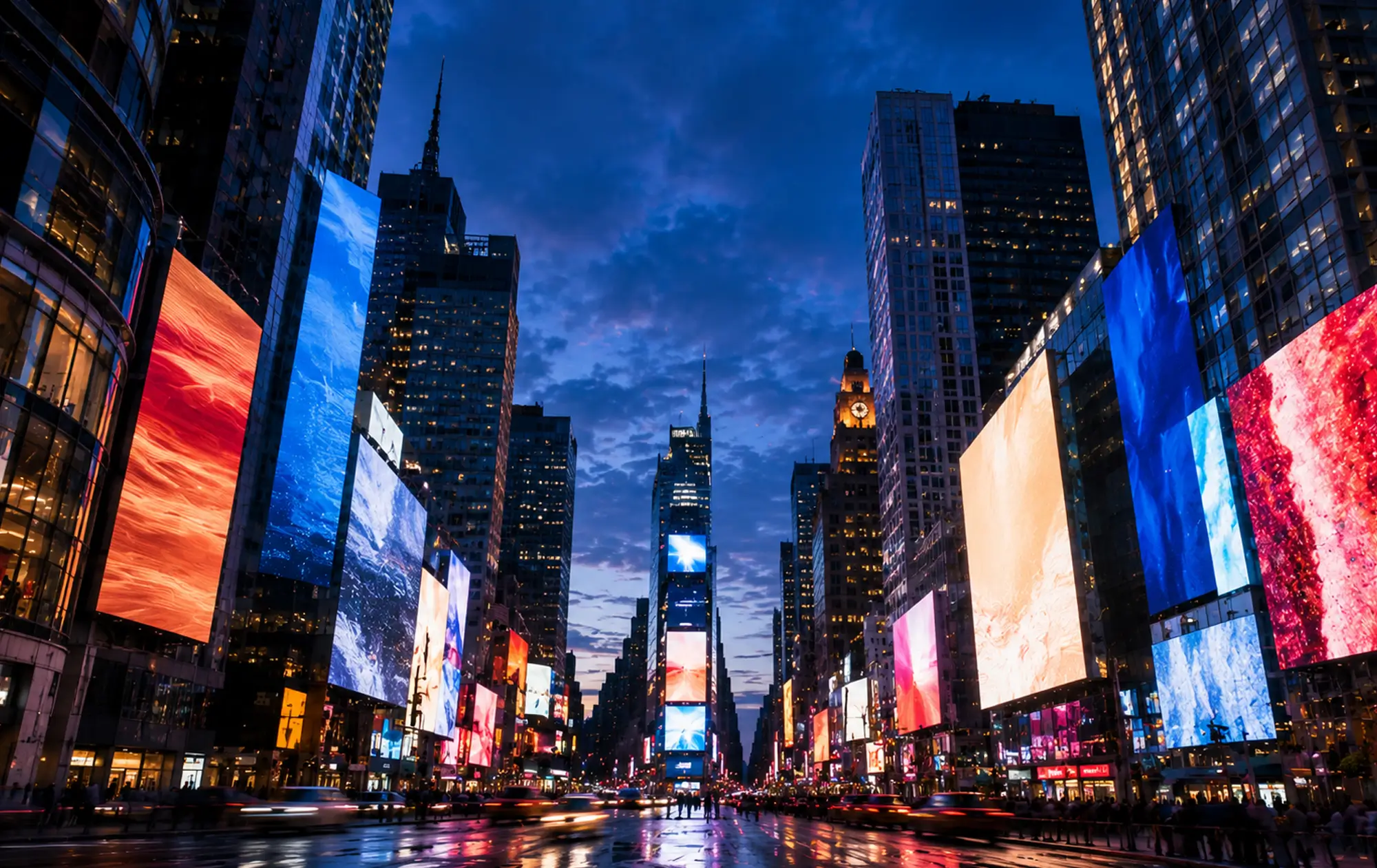
For many brands, Times Square represents a milestone.
In reality, shelf presence and brand recognition are two very different things.
It’s one of the most recognizable advertising environments in the world, where global icons, emerging brands, and cultural moments all compete for attention on the same few city blocks. For brand managers and marketing leaders, the opportunity is undeniably exciting. It’s also one of the biggest advertising investments they’ll consider.
Which inevitably leads to the question: Is it actually worth it?
It’s a fair question because Times Square isn’t a performance marketing channel. It isn’t designed to generate immediate clicks or conversions in the way paid search or social advertising can. Measuring its value requires thinking differently about what success actually looks like.
Over the past several years, we’ve had the opportunity to develop multiple campaigns destined for Times Square. Most recently, we partnered with two premium spirits brands on very different initiatives, each with its own strategic objective, creative challenge, and definition of success. Those experiences reinforced something we’ve long believed: the effectiveness of a Times Square campaign has far less to do with the billboard itself than the strategy behind it.
It’s easy to think of Times Square as just another out-of-home placement.
It isn’t.
Times Square is one of the few advertising environments that has become part of popular culture itself. On an average day, more than 220,000 pedestrians move through the district, with peak days drawing well over 300,000 visitors from around the world, creating a level of visibility that few media channels can replicate. According to the Times Square Alliance, that audience includes commuters, business travelers, tourists, and industry professionals, making it one of the most influential public spaces in the world.
But reach has never really been the question.
The better question is whether that visibility translates into something meaningful.
Increasingly, the answer is yes.
Recent research from the Out of Home Advertising Association of America found that out-of-home advertising delivers a median 20% lift in in-person outcomes and a 14% lift in digital outcomes, outperforming both traditional broadcast and connected television in the study. Rather than existing in isolation, Times Square often amplifies everything happening around it, from PR and social media to retail activation and experiential marketing.
That doesn’t mean every billboard is successful.
It means the medium works when it’s backed by the right strategy.
One of the biggest misconceptions about Times Square advertising is that success begins with the creative.
In reality, it begins with a business objective.
Every campaign asks a different question. Are you introducing a new product? Reinforcing category leadership? Supporting retail expansion? Creating cultural relevance? The answers to those questions shape every creative decision that follows.
Our two most recent Times Square projects demonstrate just how different those objectives can be.
For Amaro Nonino, the opportunity centered around the Paper Plane, which had become one of the year’s most talked-about cocktails. The objective wasn’t simply to create a visually striking billboard. It was to reinforce Amaro Nonino as the authentic ingredient behind the original recipe and transform the momentum surrounding the year’s No. 1 cocktail into lasting brand equity.
The campaign required far more than beautiful creative. It demanded a concept capable of capturing attention within seconds while strengthening authenticity, premium positioning, and cultural relevance in one of the world’s busiest advertising environments.
Angostura presented an entirely different challenge.
With Angostura Aromatic Bitters already enjoying widespread household recognition, the opportunity was to introduce consumers to the brand’s premium rum portfolio without losing the equity the brand had spent decades building. Anchored by the creative platform “Rum Like You Mean It,” the campaign celebrated craftsmanship, confidence, and Caribbean heritage while inviting consumers to experience a different side of the Angostura story.
Different objectives.
Different audiences.
Different creative solutions.
The same strategic discipline.
One of the biggest lessons we’ve taken away from developing Times Square campaigns is that the billboard itself is rarely the end goal.
Its greatest value comes from everything that happens because it exists.
It becomes content for social media. It creates opportunities for earned media. It gives distributors and retail partners something to rally around. Employees share it. Consumers photograph it. Influencers amplify it. Suddenly, a single media placement begins generating value well beyond the few seconds someone spends looking up at the screen.
That’s why many of the world’s most recognizable brands continue investing in Times Square despite having countless other advertising options. They aren’t simply buying impressions. They’re creating moments that extend far beyond the intersection itself.
Like most marketing investments, the answer depends on what success looks like.
If your objective is immediate conversions, there are more efficient channels. But if you’re looking to elevate brand perception, create cultural relevance, support broader campaigns, and establish a level of visibility that’s difficult to replicate anywhere else, Times Square remains one of the most powerful stages in advertising.
Our experience developing campaigns for brands like Amaro Nonino and Angostura reinforced the same conclusion the research continues to support.
A great Times Square billboard doesn’t succeed because it’s in Times Square.
It succeeds because it gives a great strategy one of the biggest stages in the world.
Ready to get started? Let’s talk!

