
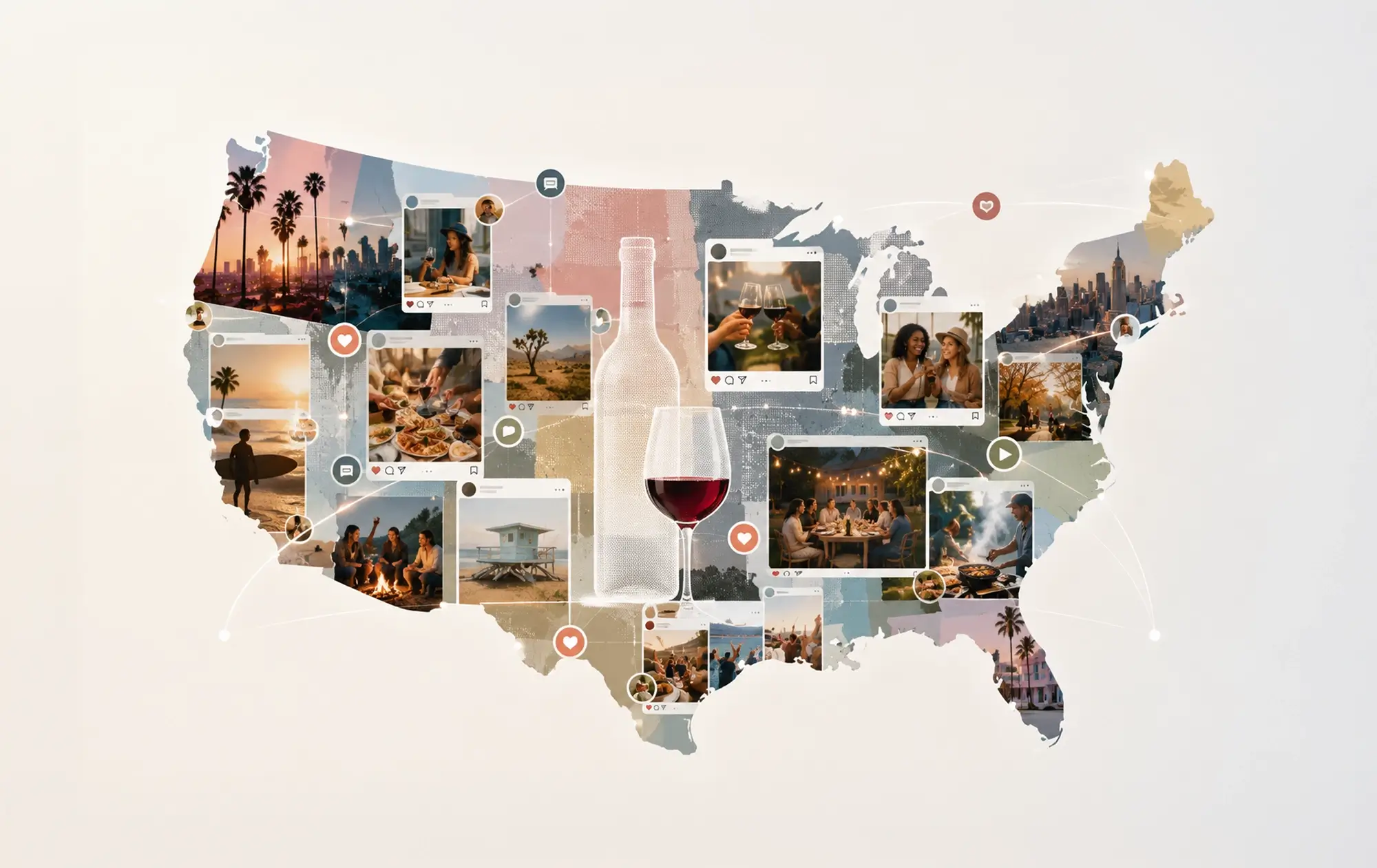
Many international brands assume that once their products secure distribution in the United States, awareness will naturally follow.
In reality, shelf presence and brand recognition are two very different things.
Over the past year, our team worked with two internationally recognized wine brands, Gato Negro and Mezzacorona, to help strengthen their presence among U.S. consumers. While both brands enjoy strong recognition in their home markets, they faced a common challenge in the United States: consumers could find their products in stores, but many had little familiarity with the brands themselves.
This is a challenge we see frequently with global brands entering or expanding within the U.S. market. Distribution creates availability, but it does not automatically create demand.
Gato Negro is one of Latin America’s most recognized wine brands, with strong awareness throughout Chile, Argentina, Mexico, and across the region. Mezzacorona is an established Italian wine producer with a long history and international footprint.
Both brands had secured placement with major U.S. retailers and distributors, giving consumers access to their products nationwide.
However, their social presence and content strategy had not been fully adapted to American audiences. Much of the content being produced reflected the cultural context and consumer behaviors of their home markets rather than the occasions, trends, and conversations driving engagement in the United States.
To grow awareness, the brands needed more than distribution. They needed relevance.
Rather than simply repurposing content created for other markets, we developed a U.S.-focused content strategy designed to make each brand feel more familiar and relatable to American consumers.
Our approach included:
Over the course of 2025, both brands experienced measurable growth among U.S. audiences.
One of the biggest misconceptions in international marketing is that consumers will connect with a brand simply because they can buy it.
In reality, consumers connect with brands that understand their culture, their interests, and the moments that matter to them.
For global brands looking to expand in the United States, success often comes from balancing a strong global identity with localized execution.
The brands that win are not the ones that translate their marketing. They are the ones who adapt it.
Entering the U.S. market is not just a distribution challenge. It is a relevant challenge.
Consumers may discover a product on a store shelf, but they build relationships with brands through the stories, content, and experiences they encounter every day.
For Gato Negro and Mezzacorona, creating content specifically designed for American audiences helped bridge the gap between availability and awareness, turning established global brands into brands that felt increasingly familiar within the U.S. market.
This is how we think. Let’s talk about what it looks like built for your brand.

